
Street Karting in Naha as a Group: What Prep You Can Skip, What You Can't, and the Back Streets to Walk Before and After
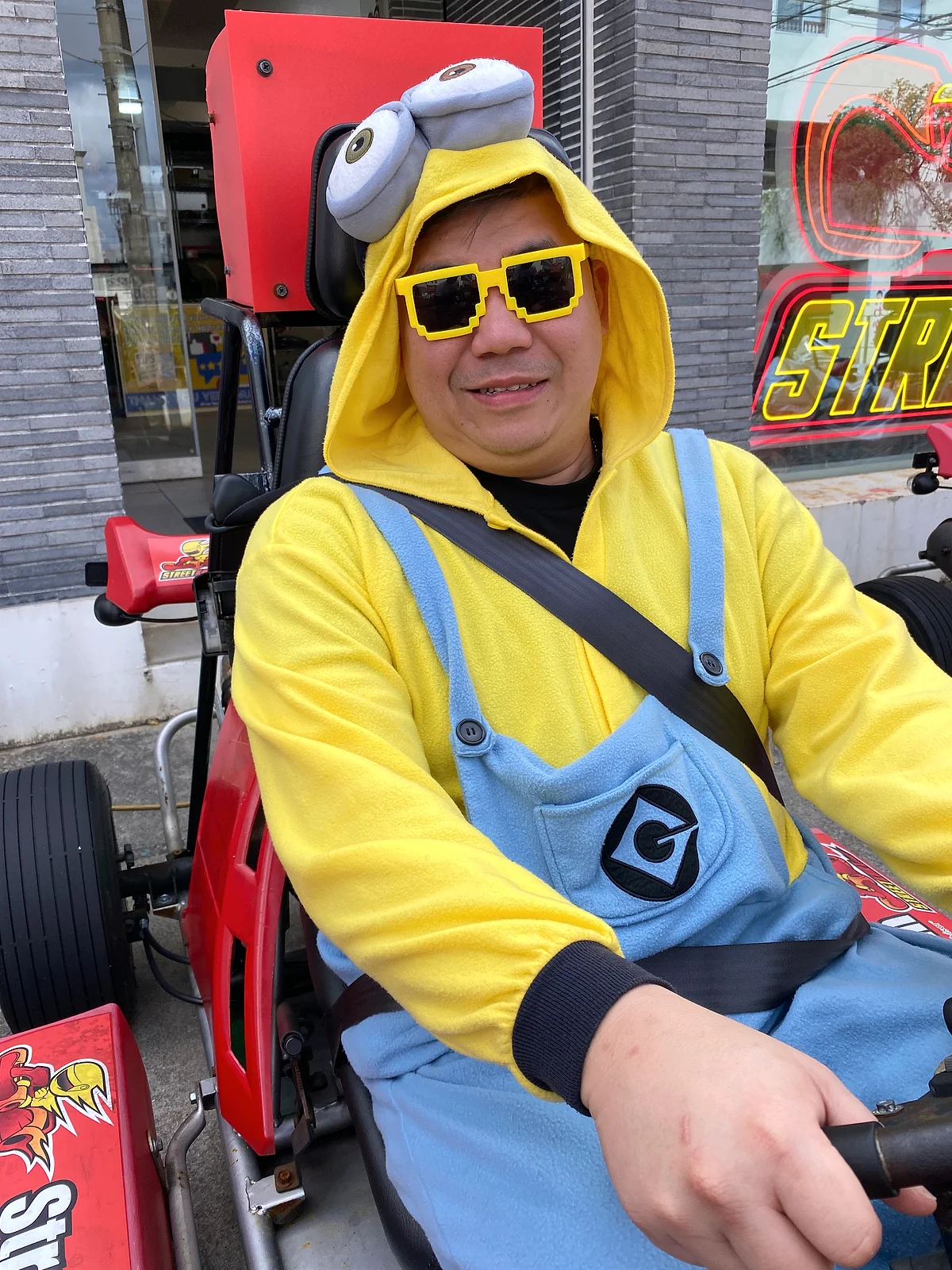
Street Karting in Naha as a Group: What Prep You Can Skip, What You Can't, and the Back Streets to Walk Before and After
Red-tiled roofs. At the end of a T-junction, a ishiganto stone is set into the wall. From the top of a cinder-block wall, a shisa lion looks down at you.
The roads that wind through Okinawan neighborhoods have a feel that map apps can't quite capture. A breeze carrying the smell of the sea slips through the alleys. A radio murmurs from someone's window, and when you turn the next corner, the voice suddenly fades. The afternoon light hits the white plaster walls, and only the shadows at your feet stay sharp and dark. That's the kind of street I mean.
Now to the main point. When you're traveling with a big group of friends and want to soak in this atmosphere, how much of the planning can you actually skip? Sometimes just lining up everyone's schedules wears you out before you've even left. Before that happens, it helps to sort out what you can drop and what you can't. The anchor for all of this is a street kart experience in Naha.
Take In the Neighborhood Streets on Foot, Before and After the Kart
Let me be clear about one thing first. Street Kart's Okinawa location (Naha) runs guided tours with a guide in front. The route is set in advance. You won't be able to say "let's check out that alley" and peel off on your own partway through.
According to the information available, the scenery along the Okinawa route includes Kokusai-dori, the area around Naha Airport, Senaga Island (a small island just south of the airport), and coastal roads. What you drive through by kart is the city of Naha and the seaside. Check the official website for the latest route.
The information also says that courses passing through Senaga Island include a rest stop on the island, with time to enjoy Blue Seal ice cream. The island is home to Senagajima Umikaji Terrace, where white buildings are stacked in tiers, and it's also a spot where you can photograph your kart against an emerald-green sea.
So where do you breathe in the neighborhood air? The answer is simple: walk on your own two feet before and after the kart ride.
About a 15-minute walk from the shop is Tsuboya Yachimun Street. It's known as a pottery district (yachimun means pottery), lined with ceramics shops and cafés. The sunlight falling on the stone paving has a dull gleam, like glaze on a bowl. About a 10-minute walk away, the area around Makishi Public Market and Ichiba-hondori is known as Okinawa's kitchen. Step one block off the main street and people's walking pace changes. Even the tone of the voices around you seems to soften.
If you want to go a bit farther, about a 20-minute walk from the shop brings you to Naminoue Beach. It's a beach right in the city of Naha, with Naminoue Shrine standing next to it. Coming out of the alleys, the view suddenly opens up and the sound of the waves takes over. If you stop here once and take in the color of the sea before driving the coastal roads by kart, the difference from the sea you see over the steering wheel becomes very clear.
I love the contrast between the "walking time" and the "kart time." In the alleys, the air fills your lungs slowly. But once you grip the wheel, the outside air hits your face directly and the sounds of the city stream past your ears. The humid air you breathed in the alleys gets swept away behind you all at once along the coast. It's the same day in Naha, but what your body takes in feels completely different. It's a little like going from the stillness of waiting for a wave to the moment the board takes off and the scenery speeds up around you. I hope you'll feel that shift for yourself.
Prep You Can Skip: Route Research, Navigator Duty, and Finding Parking
When you head out on a road trip with friends in Australia, one person usually ends up as the navigator. When to refuel, how many kilometers to the next town, where to stop for a break. That one person never gets to just gaze at the red earth out the window. I think group-trip logistics ultimately come down to a pile of tasks like these that "someone has to carry."
For the street kart portion, at least, you can put a lot of that load down.
First, route research. The course is fixed and the guide drives in front. There's no need to study maps, and no arguing over who'll navigate. The tour itself decides the order in which you'll see the scenery. You don't need to appoint a "research person" in your group. The bigger the group, the more this matters.
Next, cars. People tend to assume a rental car is a given for an Okinawa trip, but the shop has no parking. Public transportation is recommended.
Flip your thinking here and things get easier. The whole discussion of "where do we park" and "who's driving back" simply disappears. From Asahibashi Station on the Yui Rail, it's about 10 minutes by car. Booking accommodation within walking distance is another option, for example, Hyatt Regency Naha Okinawa is a 5-minute walk from the shop. If you walk over from your hotel, you'll spend almost no time planning how to get there.
You don't need to work out seating, either. The karts are single-seaters, so there's no awkwardness over "who rides with whom." Everyone drives their own.
You barely need to bring any gear. Helmets and goggles are provided at the shop. In light to moderate rain, tours run as scheduled, and raincoats are provided. Even during Okinawa's rainy season, you don't need to pack a raincoat for everyone in your suitcase.
On the smaller details, the shop has restrooms and Wi-Fi, and there's a convenience store within a 5-minute walk. It looks like you won't need to build in a detour to buy drinks or sunscreen. Being able to cut this much should take a lot of weight off the organizer's shoulders.
Prep You Can't Skip: Licenses, Headcount, Booking, and Language
Since you can drop so much, it's worth making sure the remaining items get handled properly. None of these can be fixed on the day.
The first thing to take care of is driver's licenses. Single-seat karts mean every participant is a driver. The license requirements vary depending on the country and type of license, so I can't give a definitive answer in this article. It's risky to check only the organizer's license and call it good, especially in a group of mixed nationalities. If you don't have the required documents, you can't take part on the day, and you won't get a refund. Have each person read the license information on the Street Kart official website and confirm whether they qualify. Getting this done before the trip makes it much easier to avoid the painful scenario of "one person can't ride" on the day.
One thing that's easy to miss: your license must be the original physical card. Digital licenses aren't accepted. You'll also need your passport for ID. So nobody leaves them in the hotel safe, it's a good idea to send a reminder in the group chat the night before: "original license and passport."
Next, headcount and booking. Weekends tend to fill up, so once your dates are set, I recommend booking early. Reservations are accepted via Facebook, LINE, and email (booking@streetkart.com).
Free cancellation is said to be available up to 7 days in advance. If your group's numbers might shift, it's a good idea to agree among yourselves on a deadline before then, "everyone confirms by this date." Terms can change, so check the latest cancellation policy when you book.
A standard tour group consists of up to 6 drivers and 1 guide. Larger groups are reportedly handled only at the Tokyo Bay location. To find out whether everyone can join at the Okinawa location, give the exact headcount when booking and confirm with the reservations team. If you want details on how sessions are organized, check the official website or ask when you book.
Keep communication to a single point of contact. Pick one representative and gather everyone's names, license-check status, and arrival flights into Okinawa on one note. That way, if any questions come up during booking, you won't have to re-check with everyone in the group chat.
Clothing and luggage are also things you shouldn't leave entirely up to each person. Closed-toe shoes and comfortable clothes are recommended, and you're asked to avoid sandals, heels, skirts, and dresses. If anyone is coming straight from the beach, have them bring a pair of sneakers so they don't show up in flip-flops. The shop's lockers are for small items and aren't suited to large luggage like suitcases. Rather than heading straight from the airport, drop your bags at your hotel first and then go to the shop.
Finally, language. Guidance on the tour day is basically in English. Guidance in Japanese or other languages depends on the staff that day and isn't guaranteed. On the other hand, the website is available in 22 languages. If anyone in your group isn't confident in English, have them check the supported languages on the official site and read through the information in a language they understand beforehand. If anything worries you, it's best to ask when you book.
Plan Everyone's Schedule Backward From "One Fixed Stake"
Scheduling for a big group usually gets tangled because there are too many things to decide. If you try to discuss everything with equal weight, the group chat notifications never stop.
Try a different approach. Decide on just one thing that can't move and drive a stake into it. Everything else can move freely around that stake. A street kart booking makes a perfect stake, because it has a fixed time. Check the meeting and departure conditions in the information you receive when booking.
Once the stake is in, split up freely before and after. Those curious about pottery can head to Tsuboya Yachimun Street to take in the smell of clay and the cool weight of a bowl in their hands. Food lovers can go to Makishi Public Market and wander among the light glinting off fish scales and the calls of the vendors. Everyone walks at their own pace and meets directly at the shop. I think it's better not to set up another meeting point along the way, that way, even if someone runs late, the whole plan is less likely to fall apart.
If anyone wants to swim, you could spend the morning at the beach, shower and change, and then head to the shop. You can't drive in a wet swimsuit. Work backward from the stake, including the time it takes to change.
Meet with time to spare, not right at the booking time. Check the official website or your booking information for the recommended arrival time. The bigger the group, the longer it takes for everyone to gather. While waiting for the last person, those who arrived first can grab water at the convenience store. Keeping things that relaxed means no one has to rush.
The same goes for afterward. Kokusai-dori is about a 10-minute walk from the shop, so people can naturally split up there for food and souvenirs. There are also places, like the second floor of the Daiichi Makishi Public Market, where they'll cook ingredients you bought at the market. My view is that you don't need to decide in advance what you're going to eat.
One more thing: how to handle arrival and departure days. Naha Airport is about 15 minutes by car from the shop, so you might be tempted to book right after you land. But if just one person's flight is delayed, the stake itself gets pulled out. It's safer to leave some breathing room around your flights.
Weather is another thing that can shake the stake. According to the information, tours are canceled in heavy rain or typhoons, and you can choose between a shortened tour (with the difference refunded), rescheduling, or a full refund. If you're going during typhoon season, decide as a group before the trip, "if it's canceled, do we move to another day, or switch that day to markets and alley walks?", so that the discussion on the day takes just one exchange. Check the official website for anything related to day-of operations, including weather policies.
Etiquette for Walking Neighborhood Streets as a Large Group
Before they're tourist spots, neighborhood alleys are places where people live.
A large group walking together blocks the road just by being there. Your voices also echo off the walls more than you think, the quieter the alley, the further sound carries. When you enter the alleys, I'd suggest splitting into groups of three or four. Take group photos on a wider street or in front of the shop. It's also best to avoid sitting on stone walls or reaching out to touch the shisa in front of people's homes.
If you're taking photos, look for angles that don't include people's houses or laundry. If you want to capture the depth of an alley, crouch down a little and aim for where the light breaks through at the end of the street. Only the top edge of the wall glows white, with shadow pooling beneath it. Photographing the curve of the road and the shadows of the walls, rather than people's daily lives, actually conveys the feel of the neighborhood better.
Take your trash with you, on the beach and in the alleys alike. If you spend time in the ocean, you've probably seen plastic bottles washed up at the waterline at least once. The Leave No Trace mindset is the same whether you're at the sea, in the mountains, or in a neighborhood. Treat places where people live with the same care you'd give to nature. That alone makes the alleys a much more welcoming place.
The Less You Prepare, the More of the Street You Take In
This isn't about dropping all preparation. Check everyone's licenses, book with an accurate headcount, and share language information in advance. Nail down these three things, then let go of the rest. In the space you free up, the breeze through the alleys and the bustle of the market find their way in.
Weekends tend to fill up, so I recommend getting started as soon as your dates take shape. Check the Street Kart official website for the latest tour information. Reservations are accepted via Facebook, LINE, and email.
The alleys I walked before taking the wheel held the heat of the red tiles, the distant voice of a radio, and the damp smell in the shade of the walls. How does all of that fade when the coastal wind hits it? For the final answer, feel it on your own cheeks as you drive side by side with your friends.
This article was originally written in Japanese and translated using AI. Some expressions may read unnaturally, and we appreciate your understanding. For the most accurate and up-to-date information, please refer to the official site at kart.st.
Street Kart is not affiliated with Nintendo or the Mario Kart series in any way. We do not provide costumes of Nintendo characters, and such costumes may not be worn during tours even if brought by participants.