

Don’t Give Up on Rainy Days in Okinawa! Your Guide to Wet-Weather Sightseeing and Street Kart Adventures
Ever checked the weather forecast before an Okinawa trip and felt your heart sink? You were picturing endless blue skies on that tropical island, but the screen is lined with rain icons instead. Honestly, your first reaction might be, “Well, that’s that.” But hold on a second. Speaking from over a decade of immersing myself in Japan’s natural landscapes around Shonan, let me tell you something: Okinawa’s rain reveals scenery you’ll never see on sunny days. The crystal-clear air after a squall, red-tiled roofs deepening in color from the moisture, the sound of raindrops echoing through banyan forests. Rainy Okinawa might just be Okinawa’s true face.
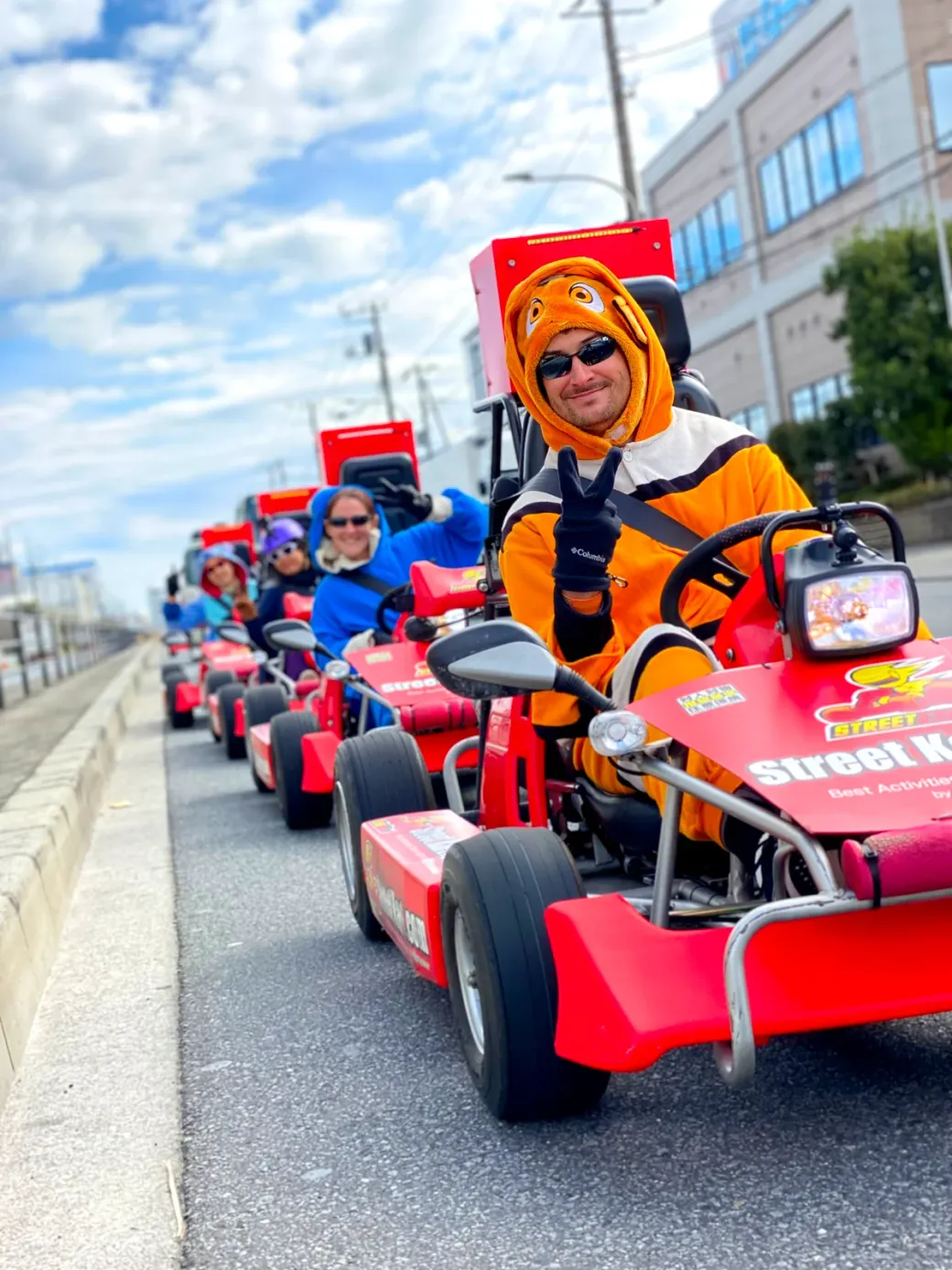
And if you still want to get active in the rain, there’s another option: Street Kart. Tearing through Okinawa’s streets with the wind in your face is one way to play that doesn’t bow easily to the weather. Here’s a real-world guide to making the most of Okinawa in the rain, told from an outdoor enthusiast’s perspective.
Okinawa’s Rain Isn’t “Bad Weather” — It’s a Different Face
For someone raised in Australia’s dry climate, Okinawa’s rain was a culture shock at first. Downpours that feel like a bucket overturned suddenly stop after 30 minutes, and out comes the blazing sun. Subtropical rain has its own unique rhythm, completely different from Honshu’s rainy season.
What my local surfer mates taught me was this: “Rain in Okinawa is a chance.” When it rains, tourist spots empty out dramatically, and you can take your time enjoying photo-worthy locations. Places like Shuri Castle Park and Shikinaen Garden look striking with their stone pathways slick from rain. Shoot it on a GoPro and you’ll capture footage with depth that sunny days just can’t match.
Especially in summer, Okinawa’s rain is a savior that drops the temperature. Walking around in 32-degree blazing heat is far less comfortable than strolling at 24 degrees after a shower. From a stamina standpoint alone, rainy-day sightseeing actually makes a lot of sense.
Indoor and Semi-Indoor Spots Where Rain Can’t Stop the Fun
When the rain really starts coming down, the first place that comes to mind is the Okinawa Churaumi Aquarium. Looking up at one of the world’s largest whale sharks delivers awe that doesn’t care about the weather. The aquarium has enough volume to spend half a day inside, and the adjacent Okichan Theater has covered seating, so rain isn’t a problem there either.
Gyokusendo Cave at Okinawa World is actually a spot best visited on rainy days. The underground limestone cave maintains a steady temperature year-round, so even in a torrential downpour, it’s cool and comfortable inside. The natural sculptural beauty carved over 300,000 years actually stands out more on humid days, when the stalactites take on richer expressions.
Kokusai Street is also a strong ally on rainy days. Arcaded streets like Heiwa-dori and Ichiba Hondori let you wander around without an umbrella. Spending time at the Daiichi Makishi Public Market tasting Okinawa-caught tuna and Agu pork, soaking in the local food culture — with rain as your background music, it somehow feels luxurious. Yachimun no Sato (the pottery village), the Ryukyu Glass Village, and the underwater observation tower at Busena Marine Park are all regulars on the rainy-day list.
There are plenty of moments when these indoor spots actually deliver more substance than sunshine-dependent destinations. If you reframe rainy days as learning days, the resolution of your Okinawa trip goes up a notch.
Can You Ride Street Kart in the Rain? The Real Story
“Can you really ride a kart in the rain?” is the question pretty much everyone asks. The short answer: tours often run even when it’s raining. Street Kart provides rain gear rentals, and light rain isn’t a problem for enjoying the tour. Only in cases of safety risks like typhoons or severe thunderstorms will the operators decide to cancel or reschedule.
Riding a kart through rainy Okinawa offers a completely different appeal than sunny days. Neon and streetlights reflected on wet pavement, the scent of sea and plants carried on humid air, the feel of fine raindrops against your skin. Your senses sharpen all at once in a way that’s hard to experience on clear days. With an action camera mounted, the rain-soaked streetscape gets framed like a scene from a movie.
Because the tours are guide-led, experienced staff adjust the route and pace for rainy conditions. The safety-conscious operation makes rainy-day rides accessible even for first-timers. For the latest operational status and what to bring, the official guidance at kart.st is the surest source.
Note that driving requires a license valid in Japan. License requirements for international participants vary by case, so check the Street Kart official driver’s license page in advance. Whether you need a Japanese driver’s license, an International Driving Permit (from a Geneva Convention country), or a combination of a license from a specific country plus an official translation depends on where you’re from — checking early gives you peace of mind.
Why Street Kart Stands Out
I’ve tried activities around the world, and Street Kart has a unique appeal. Why has this kart experience earned over 20,000 reviews with an average rating of 4.9? Let me unpack that from a few angles.
First, what really stands out: it’s an industry-first format where guides specifically trained for international drivers lead the way. While many activities operate primarily in Japanese, Street Kart’s guides are skilled at English communication. The same quality experience is available across 8 locations total — 6 in Tokyo, plus Osaka and Okinawa — which speaks to the consistency you can trust.
Next, the polish of the tour itself. With over 150,000 tours conducted and a cumulative customer count exceeding 1.34 million (as of November 2023), the accumulated know-how is the real deal. Even on your first time driving on public roads, guides manage safe following distances and pace, so you can focus on driving and soak in the streetscape.
Then there’s the vehicle quality and maintenance. They operate over 250 vehicles, and the regularly maintained public-road karts make their difference felt the moment you start moving. The weight of the steering, the responsiveness of the acceleration, the flow of the city seen from a low vantage point. There’s a sensation of being one with the ground that’s hard to replicate on a regular tour bus or bicycle.
The official site supports 22 languages, making booking smooth. The actual tours run primarily in English, so even if you’re traveling with international friends, no one gets left behind. The energy when you ride with a multinational crew is mate culture incarnate.
The location appeal is huge too. Tours at the Okinawa location let you feel the tropical streetscape and seaside atmosphere as you ride. Rainy days deliver rainy-day scenery — different from sunny days, but no less captivating. Routes are predetermined for each location, and the guide-led tour format keeps everything safe.
Street Kart is an independent activity brand and has no relationship whatsoever with any specific characters or video game titles. Related costumes are not provided. Enjoy it for what it is: a real experience driving actual karts on Japan’s public roads.
Practical Prep for Enjoying Karts in the Rain
If you’re going to ride a kart in the rain, your gear shapes the quality of the experience. Basic rain gear can be rented at the location, but if you want to bring your own, I recommend wearing quick-drying underlayers underneath. Cotton gets cold when wet, so go with polyester or merino wool materials.
For footwear, skip the beach sandals and go with sneakers or trekking shoes. Since you’re operating pedals on wet pavement, soles with good grip add real peace of mind. Just spraying them with waterproofing makes a world of difference in post-tour comfort.
Keep smartphones and wallets in waterproof pouches. Even a 100-yen-shop ziplock-style pouch does the job. If you’re using an action camera, applying water-repellent coating to the lens helps prevent raindrops from disrupting your footage. Most GoPro models don’t require waterproof housing, so you can mount the body directly.
Don’t forget to check the weather forecast before riding. Okinawa’s rain shifts suddenly, so tracking cloud movement on a radar forecast app makes it easier to predict conditions mid-tour. If winds exceed 10 meters per second or thunderstorms are involved, the operators may send notice of tour changes for safety reasons.
Enjoy Rainy Okinawa at Your Own Rhythm
No one can control the weather. But you can choose how to enjoy it. Rainy Okinawa offers scenery and a slower flow of time you can’t encounter on sunny days. Touch the depth of Okinawan culture at indoor spots, then tear through the streets on a Street Kart once the rain lifts. A day with that kind of ebb and flow enriches your travel memories.
Respect nature, don’t push too hard, and move at your own pace. Whether it’s surfing, karting, or sightseeing, the principle doesn’t change. Once you stop treating rain as an enemy and accept it as another face Okinawa shows you, the quality of your trip jumps up dramatically.
You can book the Street Kart experience at kart.st. The official site has the latest information on rainy-weather operations and what to bring, so be sure to take a look before you head out. License requirements are detailed at https://kart.st/en/drivers-license/.
Here’s hoping Okinawa’s rain becomes a memory that sticks with you. Whether rain or shine, let’s enjoy it all together with your crew.
A Note About Costumes
We do not offer rentals of costumes related to Nintendo or “Mario Kart.” We provide only costumes that respect intellectual property rights.
