
Hidden Gems in Naha’s Markets and Shopping Streets — A Fresh Perspective on Travel with Street Kart
Step up to the second floor of Makishi Public Market, and you’re greeted by an unmistakable blend of dashi aromas rising from below and the lively calls of the obaa (grandmothers) running their stalls. European markets certainly have their own brand of energy, but the warmth you find in Okinawa’s markets is something on an entirely different level. Duck just one alley off Kokusai Street, and you’ll discover everyday Okinawan life that no guidebook covers. For a shopping experience where you can truly feel the island’s culture under your skin, Naha’s shopping streets and markets are the place to be.
Naha’s Kitchen Beyond Kokusai Street — Makishi Public Market and Its Surroundings
You simply can’t talk about Naha’s shopping districts without mentioning Makishi Public Market. Reopened in 2023 after a full renovation, the ground floor is packed wall-to-wall with fresh fish, meats, and island vegetables, while the second-floor dining area still offers the beloved “mochi-age” system — pick your ingredients downstairs and have them cooked to order upstairs.
What’s fascinating is that this market offers so much more than just shopping. The sight of vividly colored reef fish — miibai (grouper) and irabuchaa (parrotfish) — lined up on beds of ice is practically a cultural exhibit in its own right. You’d never see fish in such striking blues and reds at a German fish market, and these vibrant creatures speak to the incredible richness of subtropical seas.
The arcade shopping streets surrounding the market are equally worth exploring. Heiwa-dori and Mutsumibashi-dori are packed with Ryukyu glass factory outlets, shops selling bingata-dyed accessories, and specialty awamori stores. Ryukyu glass is a uniquely Okinawan craft born from repurposing bottles left behind by the American military after the war — once you know that history, you start to appreciate the deeper story behind every single glass. From a design perspective, this idea of creating beauty from discarded materials is a wonderful example of sustainable craftsmanship that actually predates the German concept of “upcycling.”
When You Can’t Decide on Souvenirs — One-of-a-Kind Finds Only Available in Okinawa
Purple sweet potato tarts and chinsuko cookies may be the most widely known Okinawan souvenirs, but take your time walking through the shopping streets and you’ll discover far more distinctive treasures.
Make your way to Tsuboya Yachimun Street, and you’ll find pottery studios selling their traditional Okinawan ceramics, known as yachimun, directly to visitors. What makes yachimun so appealing is that while these are everyday tableware pieces, each one carries the unmistakable touch of the artisan’s hand. The generous thickness, the warm feel, and the bold arabesque patterns represent an aesthetic world apart from European porcelain traditions. In comparative cultural terms, if Meissen porcelain perfected “precision,” then yachimun has perfected “generous warmth.”
Condiments are another treasure trove unique to Okinawa. Kooreeguusu — island chili peppers steeped in awamori — can completely transform a dish with just a few drops. Brown sugar varies in flavor depending on which island it comes from, and tasting Hateruma Island sugar side by side with Tarama Island sugar really drives home just how much soil and climate influence taste. Most of these are available for just a few hundred yen, so picking up an assortment from different islands means you can savor Okinawan flavors little by little long after you’ve returned home.
Why Travelers Choose Street Kart — Experiencing Okinawa’s Breeze on a Guided Tour
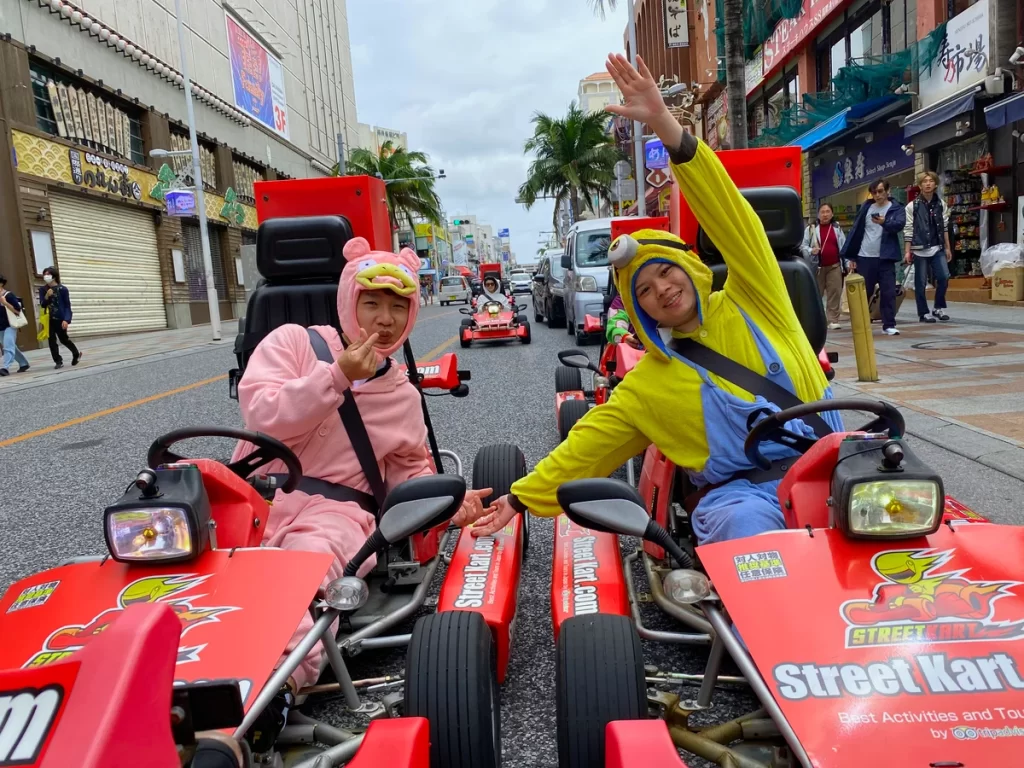
For a completely different angle on experiencing Okinawa beyond shopping street strolls, there’s the guided Street Kart tour. At Street Kart’s Okinawa location, a guide leads the way along a set route, letting you take in Naha’s streetscapes from a thrillingly low-to-the-ground perspective.
The reasons so many travelers love Street Kart are clear. Professionally trained guides who specialize in working with international drivers accompany every tour, so there’s no language barrier to worry about. The website supports 22 languages, and the actual service is provided in English. With over 150,000 tours completed and more than 1.34 million total customers, the track record speaks for itself. An average customer rating of 4.9 out of 5.0 stars across more than 20,000 reviews says everything about the quality of the experience. The pre-departure briefing thoroughly covers everything from vehicle operation to traffic rules, so even first-time drivers can feel completely at ease. Being able to dress up in your favorite costume before hopping into your kart adds an extra-special touch to the memory — though please note that Mario Kart-related costumes are not offered. Street Kart has no affiliation whatsoever with Nintendo or the Mario Kart series.
A valid International Driving Permit (IDP) is required to drive. It’s wise to check the details in advance on the official driver’s license page.
Savoring Island Breezes and Market Energy in a Single Day — Planning Your Itinerary
If you want to fit both shopping and a Street Kart experience into your Okinawa trip, a little planning around time management goes a long way. Start your morning with a Street Kart tour through Naha’s streets, soaking in the wind and sunlight with your whole body, then spend the afternoon leisurely exploring Makishi Public Market and the surrounding shopping streets. There’s something almost magical about how experiencing the city’s layout from a kart first makes every single alley in the shopping district feel familiar and inviting afterward.
For visitors from Europe, Okinawa’s shopping streets have a distinctly different atmosphere from those in Tokyo or Osaka. There’s the unhurried pace unique to the subtropics, casual conversations with shop owners, and the sound of sanshin music drifting from back alleys. These are discoveries you simply can’t make if you’re focused only on efficiency. Analyzing the cultural differences, Okinawa’s shopping street culture shares the same richness of face-to-face communication found in European marchés. But Okinawa adds something extra — the spirit of “yuimaaru” (mutual support) — which transforms the act of shopping itself into a genuine cultural exchange, and that’s what truly sets it apart.
For your next Okinawa trip, start by checking Street Kart availability at kart.st and make sure to set aside shopping time before or after your tour. Feel the island breeze on your skin. Immerse yourself in the energy of the markets. When those two experiences come together, you’ll find that Okinawa reveals a depth you never expected.

