

Don’t Give Up on Rainy Days in Okinawa! Your Guide to Wet-Weather Sightseeing and Street Kart Adventures
Ever checked the weather forecast for your Okinawa trip and felt your heart sink? You were dreaming of clear blue skies on a tropical island, but the screen is filled with rain icons. Honestly, your first reaction might be, “Well, that’s a wash.” But hold on a second. Coming from someone who’s spent over a decade engaging with Japan’s nature in Shonan, let me tell you: Okinawa’s rain shows you landscapes that sunny days never reveal. The translucent air after a sudden squall, the deepening colors of red-tiled roofs in the moisture, the patter of raindrops echoing through gajumaru tree forests. Rainy Okinawa might just be one of the truest faces of the island.
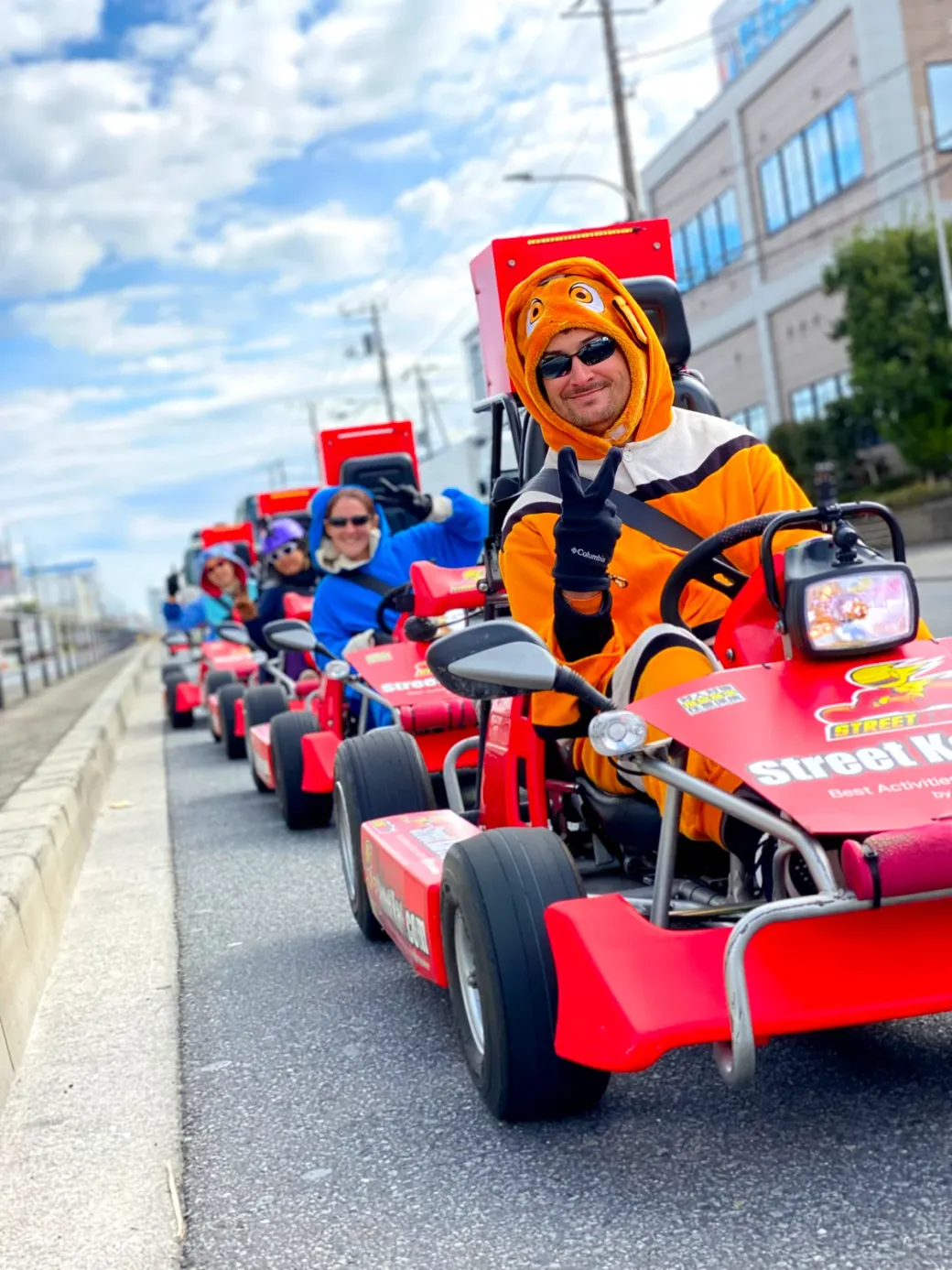
And if you want to stay active even when it’s pouring, there’s the option of street karting. Cutting through Okinawa’s streets with the wind in your face is actually one of those activities that isn’t as weather-dependent as you’d think. Here’s a real, outdoor-minded breakdown of how to make the most of Okinawa even when the rain rolls in.
Okinawa’s Rain Isn’t “Bad Weather” — It’s a Different Face
Coming from the dry Australian climate, Okinawa’s rain was a culture shock at first. Buckets of water would pour down for 30 minutes, then suddenly stop dead, and the brutal sun would pop right back out. Subtropical rain has its own distinct rhythm, totally unlike the rainy season on Japan’s mainland.
What my local surfer mates taught me was the mindset: “Okinawa’s rain is an opportunity.” When it rains, the crowds at tourist spots thin out, and you can take your time at photo-worthy locations. Places like Shuri Castle Park and Shikinaen Garden look striking with their stone pathways glistening from the rain. Shoot it on a GoPro and you’ll often get footage with a depth you’d never capture on a sunny day.
Especially in summer, Okinawa’s rain is a savior that drops the temperature. Walking around under blazing 32°C heat is a lot tougher than strolling at a cool 24°C after a shower. From a stamina standpoint, rainy sightseeing actually makes a lot of sense — it lets you take your time without burning out.
Indoor and Semi-Indoor Spots to Enjoy Okinawa in the Rain
When the rain really starts coming down, the first spot that comes to mind is the Okinawa Churaumi Aquarium. Looking up at one of the world’s largest whale sharks delivers a kind of awe that has nothing to do with the weather. You can easily spend half a day inside, and the adjacent Okichan Theater has covered seating, so you can enjoy the dolphin shows even in the rain.
Gyokusendo Cave at Okinawa World is actually one of those places you want to visit specifically on rainy days. The underground limestone cave stays at a constant temperature year-round, so even if it’s pouring outside, you’ll stay cool and comfortable. The natural sculptures carved over 300,000 years feel like they show even more character on humid days, with the stalactites really coming to life.
Kokusai Street is also a strong ally when it rains. The arcaded Heiwa-dori and Ichiba Hondori shopping streets are easy to wander without an umbrella. Spending time at the First Makishi Public Market, savoring local tuna and Agu pork while soaking in Okinawan food culture, somehow feels extra luxurious with the rain as background music. Yachimun no Sato, the Ryukyu Glass Village, and the underwater observation tower at Busena Marine Park are regulars on the rainy-day list, too.
Honestly, these indoor spots sometimes pack more substance than the must-have-sunshine destinations. Reframing rainy days as learning days takes your Okinawa trip up a notch.
Can You Ride a Street Kart in the Rain? The Real Story
“Can you actually ride a kart in the rain?” — that’s a question pretty much everyone asks. Tours do run in rainy weather, and Street Kart provides rainwear for rental. If there’s a safety risk like a typhoon or severe thunderstorms, the operator may cancel or reschedule the tour. For the latest operating status, check the official info at kart.st before you head out.
Cruising rainy Okinawa on a kart has its own appeal that’s different from sunny days. Neon and streetlights reflecting off wet pavement, the scent of sea and plants carried on damp air, the sensation of fine raindrops on your skin. It’s a feeling of heightened senses you don’t get under clear skies. If you’ve got an action cam mounted, you can capture footage of the rain-soaked streets that looks straight out of a movie scene.
Since the tour is guided format with a leader out front, experienced staff adjust the route and pace for rainy conditions. That safety-conscious operation is exactly why even first-timers can take on a rainy ride with confidence.
A valid driver’s license is required. For Japanese domestic licenses, plus license requirements for overseas participants — which vary by country — please check the official Street Kart driver’s license page ahead of time. International Driving Permits (based on the Geneva Convention) and licenses from certain countries may require a Japanese translation, so checking before your trip is essential.
Why People Choose Street Kart
I’ve tried activities all over the world, but Street Kart has a unique appeal that’s hard to find elsewhere. Why has this kart experience earned such high marks in so many reviews? Let me break it down from a few angles.
First, what really stands out is the guide-led format with staff trained for international drivers. While many activities run primarily in Japanese, Street Kart’s guides are well-versed in English and lead the way for you. The same quality experience is offered across multiple locations including Tokyo, Osaka, and Okinawa, which speaks to the trust in their operation. For the latest store info and supported languages, check kart.st.
Next, the polish of the tour itself. Years of operating experience means accumulated know-how. Even on your first time on public roads, the guide manages spacing and pace, so you can focus on driving and soaking in the scenery.
Then there’s the vehicle quality and maintenance. The street-legal karts go through regular servicing, and you feel the difference the moment you start moving. The weight of the steering, the responsiveness of the acceleration, the flow of the city seen from a low vantage point. It’s a sense of speed that fuses you with the ground — something you just can’t get from a regular tour bus or bicycle.
The official site supports multiple languages, making booking smooth. The actual tour runs in English, so even joining with friends from overseas, the design minimizes language barriers. The hype when you’re rolling with a multinational crew is pure Mate culture in action.
The locations are a big draw, too. The Okinawa store tours let you cruise through tropical streetscapes and feel the seaside air. Rainy days bring scenery that’s different from sunny ones. Courses are set by each store, with the tour structured as a guide-led tour through the streets.
Note: Street Kart is an independent activity brand and does not provide costumes. Enjoy it as the real deal — driving genuine karts on actual Japanese public roads.
Practical Prep for Enjoying Karting in the Rain
If you’re hopping on a kart in the rain, your gear shapes the experience. The basic rainwear can be rented at the store, but if you’re bringing your own, layering quick-dry underwear underneath is a solid move. Cotton gets cold fast when wet, so go for polyester or merino wool.
For footwear, skip the beach sandals and go with sneakers or trekking shoes. You’ll be working the pedals on wet pavement, so a grippy sole gives peace of mind. Just a light spritz of waterproof spray makes a world of difference in how comfortable your shoes feel after the tour.
Tuck your phone and wallet into a waterproof pouch for safety. A 100-yen-shop zip-lock style pouch does the job just fine. If you’re using an action cam, applying water-repellent coating to the lens helps keep raindrops from messing up your footage. With GoPros, many recent models don’t need a waterproof housing, so you can mount the unit directly.
Don’t forget to check the forecast before riding. Okinawa’s rain shifts fast, so a radar app that shows cloud movement helps you predict conditions during the tour. If winds exceed 10 meters per second or there’s rain with lightning, the operator may communicate tour changes for safety.
Enjoy Rainy Okinawa at Your Own Rhythm
Nobody controls the weather. But how you enjoy it — that’s your call. Rainy Okinawa offers scenery and a slower flow of time you don’t easily encounter on sunny days. Touch the depth of Okinawan culture at indoor spots, then race through the streets on a street kart once the rain lets up. A day with that kind of ebb and flow makes the travel memories richer.
Respect nature, don’t push it, go at your own pace. That principle holds true whether it’s surfing, karting, or sightseeing. The moment you stop treating rain as the enemy and accept it as another face Okinawa shows you, the quality of your trip jumps up a level.
You can book your Street Kart experience at kart.st. The latest info on rainy-day operations, what to bring, and license requirements is also on the official site (license info at kart.st/en/drivers-license/), so be sure to give it a look before you go.
Here’s hoping Okinawa’s rain becomes a day worth remembering. Grab your mates and enjoy it all — rain or shine.
A Note on Costumes
Our shop does not rent out costumes related to Nintendo or “Mario Kart.” We only offer costumes that respect intellectual property rights.
